Balayage vs. Highlights: What's the Real Difference?
You've saved a few inspiration photos, you're ready to add some brightness, and then you hit the wall everyone hits: balayage or highlights? They get used like they mean the same thing, so it's easy to book one and quietly hope you asked for the right thing. Let's be real — the words matter less than what they actually do to your hair.
Here's the honest version, no jargon, so you can walk into your consultation knowing exactly what to ask for.
What's the difference between balayage and highlights?
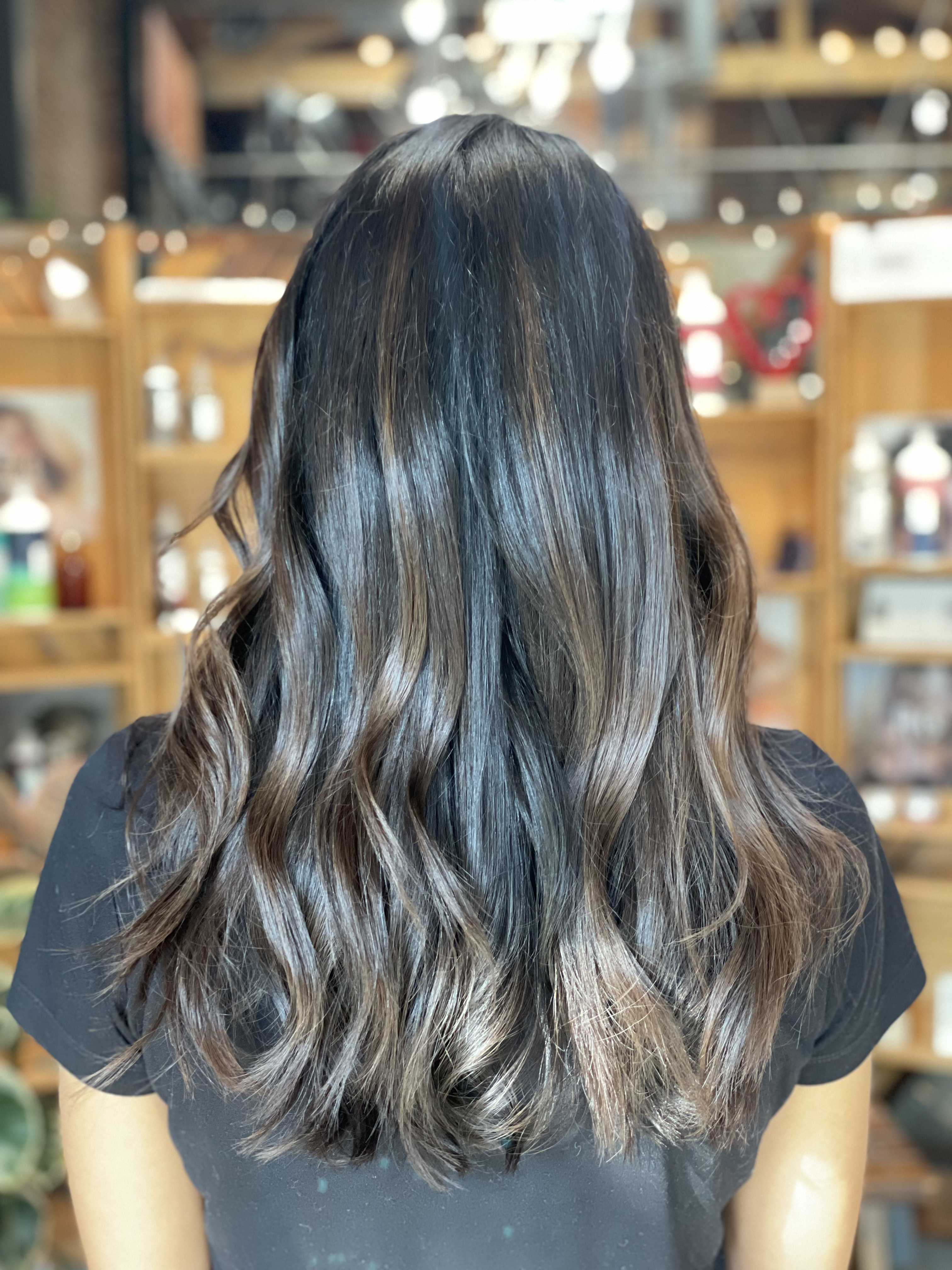
Balayage is a freehand technique where color is hand-painted onto the surface of your hair, so lightness builds through the mid-lengths and ends for a soft, sun-kissed gradient. Highlights are woven sections saturated from the root and wrapped in foil, giving brighter, more uniform lift from root to tip. Same goal — dimension — two very different roads to it.
Think of balayage as turning up the light where the sun would naturally hit, and highlights as adding evenly spaced ribbons throughout. Because balayage starts a few inches down instead of at the root, there's no hard line as your color grows out. Highlights start right at the scalp, which reads brighter and more polished up top — but that same placement is why regrowth shows sooner.
Neither is "better." They're built for different priorities: balayage leans natural and low-effort, highlights lean bright and controlled.
How is each one actually done?
With balayage, your colorist paints lightener directly onto the hair's surface, feathering it lighter toward the ends and usually letting it process in the open air. That freehand control is what creates the lived-in, blended finish — and why the artistry of the person holding the brush matters so much. Two colorists can "do balayage" and get completely different results.
Highlights are more structured. Thin sections are woven out with a comb, coated with lightener, and folded into foil. The foil traps heat and keeps the product off surrounding hair, which lets it lift more shades and stay crisp and defined. It's the precise, engineered approach — great when you want consistent brightness or maximum lift.
There's also a hybrid worth knowing: foilyage, which paints the hair balayage-style but then wraps those painted pieces in foil. You get the soft placement of balayage with the extra lift of foils — especially useful on darker hair, where open-air painting alone often can't get bright enough. During lightening of any kind, a bond-builder like Olaplex or K18 helps protect the hair's integrity.
How much does balayage cost vs. highlights?
Balayage usually runs higher per visit — commonly $150 to $450+ depending on length and how much lift you want — while highlights range from around $20 for a small partial up to $150+ for a full head. But the per-visit price only tells half the story. Because balayage stretches so much further between appointments, it often costs less over a full year.
Run the math and it flips fast. Balayage at three to four visits a year lands somewhere around $750–$1,200 annually. Full highlights maintained every six to eight weeks can climb to $1,500–$2,500 a year. In a city like San Francisco, where pricing sits at the higher end, that gap between "cheaper today" and "cheaper this year" is worth thinking through before you book.
One local note worth flagging: at Taylor Monroe our pricing is gratuity-free, so the quote you get in your free consultation is the actual price — no mental math on top at checkout.
Which lasts longer between appointments?
Balayage wins on maintenance, easily. Because the color doesn't start at your roots, there's no sharp line of regrowth, so most people comfortably stretch to every three to four months (roughly 12–16 weeks) between visits. It grows out soft instead of obvious. That's the whole appeal — low-maintenance luxury.
Highlights ask more of your calendar. With lightened sections beginning right at the scalp, natural regrowth shows within about four to six weeks, and most people rebook every six to ten weeks to keep that root-to-end brightness looking intentional. Between visits, a purple shampoo helps manage brass and a gloss treatment keeps everything looking fresh. If the constant upkeep is what burns you out, that difference alone often makes the decision for you.
Balayage vs. highlights at a glance
| Balayage | Highlights | |
|---|---|---|
| Technique | Hand-painted, open air | Woven sections in foil |
| Placement | Mid-lengths to ends | Root to tip |
| Look | Soft, natural, blended | Bright, uniform, defined |
| Grow-out | Seamless, no hard line | Visible root line in 4–6 wks |
| Rebook cadence | Every 12–16 weeks | Every 6–10 weeks |
| Per-visit cost | $150–$450+ | $20–$150+ |
| Best for | Low upkeep, natural finish | Max brightness, dark hair lift |
Which one is right for your hair?
Choose balayage if you want a natural, grown-out look and hate frequent salon visits; choose highlights if you want brighter, more uniform lift or you're starting from dark hair that needs foils to actually go light. The real answer depends on your hair type and your lifestyle far more than on which one is trending this season.
A few honest guideposts. On very dark hair (think level 3–4 deep brown), open-air balayage often only lifts a shade or two and can barely show — which is exactly where foilyage or traditional foils earn their keep. If your hair is fine or already fragile, the gentler processing of balayage is usually the kinder route. And if your budget is tight today but you're okay committing to upkeep, a partial highlight is the lower-cost entry point.
The most common coloring regret? Picking a technique off a photo instead of matching it to your actual hair. A good colorist will talk you out of the wrong one.
How to find the right colorist in San Francisco
Look for a colorist who asks about your hair history and your routine before they ever mention a technique — because the right call depends on your starting shade, your hair's condition, and how often you realistically want to sit in the chair. A specialist should be able to explain why they're recommending balayage, foils, or foilyage for you specifically, not just default to whatever's popular.
That consultative approach is how we work at Taylor Monroe. We're a San Francisco color studio with 17 years of experience (seven of them here in the city), and dimensional color — balayage, highlights, and blonding — is core to what we do, with locations in Lower Haight at 146 Fillmore St and in the Castro at 228 Sanchez St. Every color service starts with a free 15-minute consultation, so before anything is committed to, we look at your hair together and map out the technique, the maintenance, and the honest price. Gratuity-free, so that quote is the number.
Frequently Asked Questions
Is balayage or highlights better for dark hair?
Highlights or foilyage usually win on dark hair. On deep brown (level 3–4), open-air balayage often lifts only one or two shades and barely shows, while foils trap heat and lift several shades more. If you want visible brightness on dark hair, ask your colorist about foilyage — balayage placement with the extra lift of foils.
Which is less damaging to your hair?
Balayage is generally gentler because it uses less processing and needs fewer touch-ups over time. That makes it the safer pick for fine or fragile hair. Any lightening service is more protective when your colorist uses a bond-builder like Olaplex or K18 during the appointment to support your hair's integrity.
How often do I need to come back for each?
Balayage typically stretches to every 12 to 16 weeks because it grows out with no hard line. Highlights usually need refreshing every 6 to 10 weeks, since the color starts at the root and regrowth becomes visible within about four to six weeks. Balayage is the clear low-maintenance option.
Why does balayage cost more per visit?
Balayage is a freehand, hand-painted technique that takes real skill and time, which is reflected in the per-visit price of roughly $150 to $450+. Highlights run less per session. But because balayage lasts far longer between appointments, it often costs less across a full year than maintaining regular highlights.
What is foilyage?
Foilyage is a hybrid: your colorist paints the hair balayage-style, then wraps those painted sections in foil. The foil adds heat and lift, so you get the soft, natural placement of balayage with brightness closer to traditional highlights. It's especially useful on darker hair that won't lighten enough with open-air painting alone.
Can I switch from highlights to balayage?
Yes, and many people do to cut down on maintenance. The transition sometimes takes a session or two, since your colorist is blending existing foiled brightness into a softer, more grown-out placement. A consultation first is worth it so you both agree on the target look and a realistic timeline to get there.
The Bottom Line
Balayage and highlights aren't rivals so much as different tools for different goals. If you want brightness that grows out gracefully and rarely pulls you back to the salon, balayage is likely your move. If you want maximum lift, crisp uniform brightness, or you're working with dark hair, foils — or foilyage — will get you there. The best choice is the one that fits your hair type, your color history, and how much upkeep you actually want in your life.
If you're still torn, that's exactly what a consultation is for. Come in for a free 15-minute chat at either of our San Francisco studios, and we'll look at your hair, talk through the trade-offs honestly, and land on the technique that makes sense for you — no pressure, just a clear plan.
