
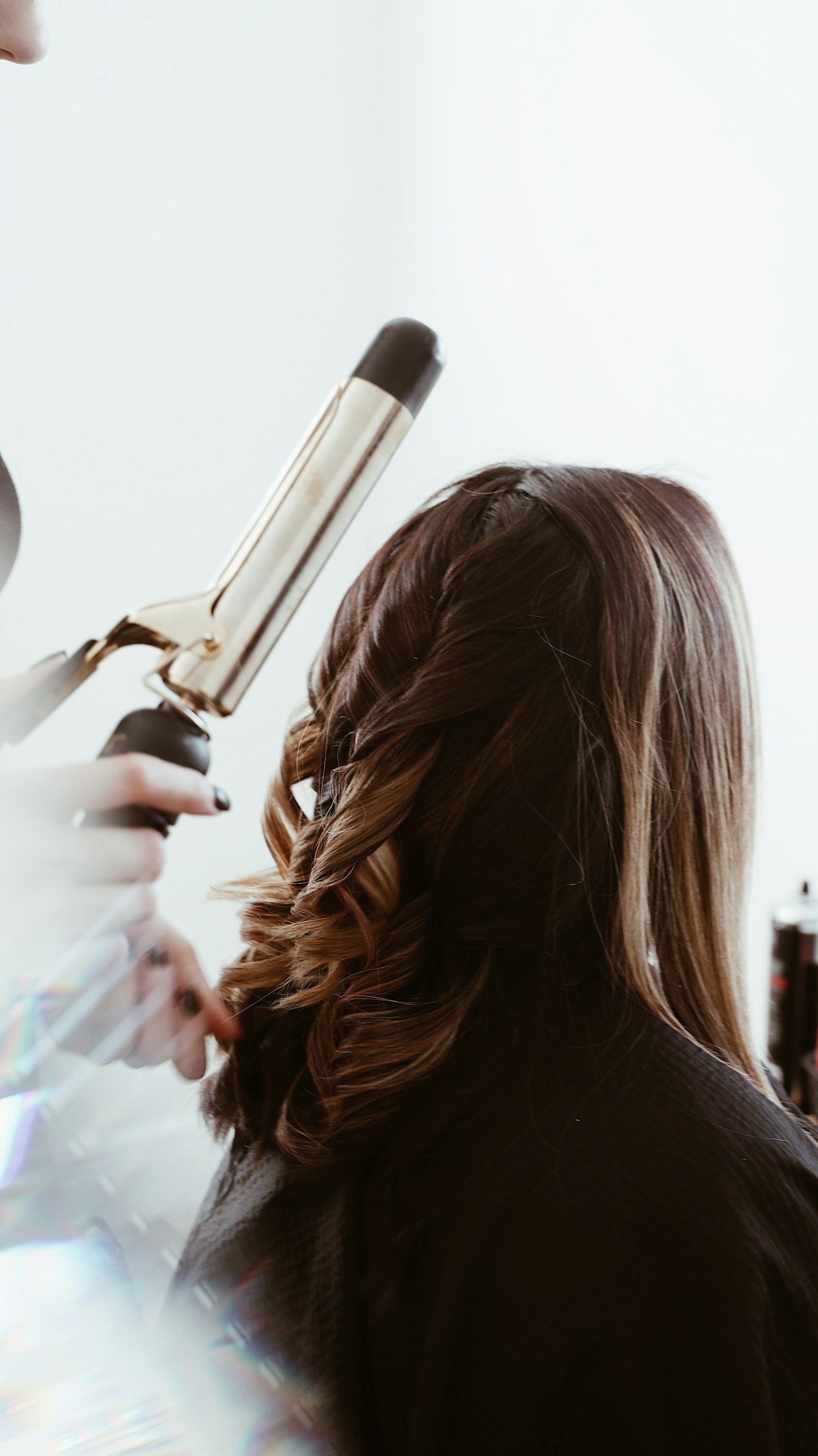
Balayage vs. Ombré: What's the Real Difference?
You've saved a dozen photos of sun-kissed, darker-at-the-root, lighter-at-the-ends hair, and half of them are labeled "balayage" while the other half say "ombré." So which one do you actually ask for? Honestly, it's one of the most common mix-ups we hear in the chair, and the answer changes what you'll pay and how often you'll be back.
What's the difference between balayage and ombré?
Balayage is a technique: a colorist hand-paints lightener onto individual sections of hair, freehand, for soft, scattered dimension. Ombré is a look: a gradient where hair stays darker at the root and gets noticeably lighter toward the ends, usually in a full horizontal band. One describes how color is applied. The other describes what it looks like.
That's why the terms blur so easily. A colorist can use balayage painting to build an ombré, and plenty of balayage ends up a little lighter at the bottom. But in practice, when people say "balayage" they mean soft, natural, sun-kissed pieces, and when they say "ombré" they mean a clear, intentional fade from dark to light.
Here's a simple way to picture it. Balayage is like sunlight landing on certain strands. Ombré is like dipping the ends of your hair in a lighter shade and letting the line soften. Both can be gorgeous. They just solve different problems.
How is balayage applied compared to ombré?
Balayage is painted onto the surface of chosen sections with a brush, usually starting a few inches from the scalp and getting denser toward the ends. Ombré lightens the entire lower portion of the hair, all the way around, with the color blended upward so the transition looks graduated rather than sliced.
The word "balayage" is French for "sweeping," and that's exactly the motion. Your colorist picks individual pieces, paints the lightener on the outside of each section, and often leaves it to process in open air or wrapped in cotton or plastic. Some colorists use a hybrid called foilyage, where the painted sections are wrapped in foil to trap heat and get more lift, which helps a lot on darker hair.
Ombré is more about the whole canvas. The colorist decides where the fade should begin, often around the jawline or below, and saturates everything beneath it, blending upward with a teasing or backcombing technique so there's no hard edge. Think of balayage as placing highlights one at a time, and ombré as shifting the whole lower half of your hair a few shades lighter.
Those different methods create very different grow-outs. Balayage leaves plenty of your natural color woven through the lightness. Ombré creates a single, defined zone of light. That difference drives almost everything else, from maintenance to price.
Balayage vs. ombré at a glance
Balayage gives soft, scattered dimension that grows out quietly; ombré gives a bolder, more graphic fade that needs a cleaner refresh schedule. In San Francisco, full balayage generally runs about $250 to $450 or more, and ombré typically lands around $200 to $400, depending on length, thickness, and how far your hair needs to lift.
| Balayage | Ombré | |
|---|---|---|
| What it is | A hand-painting technique | A finished look (a root-to-end gradient) |
| Where the lightness sits | Scattered pieces, brightest around the face and ends | A full band across the lower lengths |
| Contrast | Soft, blended, lived-in | Bolder, with a visible horizontal fade |
| Typical lift from your base | 2–4 levels | 3–5+ levels on the ends |
| Full refresh | Every 12–16 weeks (often longer) | Every 8–12 weeks to keep the fade clean |
| Toner or gloss | Every 6–8 weeks for cool tones | Every 6–8 weeks; ends go brassy fast |
| Typical SF price | About $250–$450+ for a full session | About $200–$400, length-dependent |
| Best for | Natural dimension, low-maintenance grow-out | A deliberate, graphic statement |
Prices vary with your hair's history and the colorist's experience, so treat these as realistic ranges, not quotes. Toner, bond-building treatments, and a cut can change the final number, which is why it's worth asking for an all-in price up front.
Which lasts longer and is easier to maintain?
Balayage is usually the lower-maintenance choice. Because lightness is scattered and starts away from the scalp, regrowth blends into the pattern rather than creating a line, and many people go 12 to 16 weeks or more between full appointments. Ombré tends to need a refresh every 8 to 12 weeks to keep the fade looking deliberate.
Here's the thing about ombré: technically, your roots are supposed to be dark, so regrowth isn't the problem. What changes is the placement. As hair grows, the fade drifts down, the light ends get trimmed away, and the transition can start to look like grown-out color instead of a choice. Brassiness also shows quickly on a large, solid blonde area.
Balayage has its own upkeep, just gentler. Cooler blondes and brightened brunettes fade toward warmth, so a toner or gloss every 6 to 8 weeks keeps the tone where you want it. A purple shampoo once or twice a week helps if your pieces lean blonde, and a blue shampoo does the same job for brunettes who fight orange.
There's a middle ground, too. Sombré, short for "soft ombré," keeps the root-to-end gradient but with only a level or two of difference. When roots stay natural, sombré can go six months or more between color appointments. If the grow-out struggle is what's burning you out, that's worth knowing about.
Which one is right for you?
Choose balayage if you want natural, sun-touched dimension that grows out softly and looks like your own hair, just brighter. Choose ombré if you want a deliberate, eye-catching fade and don't mind more regular refreshes. If you're torn, sombré or a soft balayage with a brighter bottom gives you a bit of both.
A few things tip the decision:
- Your starting color. On dark hair, a big ombré band means lifting a lot of hair through its red and orange stages. Balayage on dark hair often looks more natural and is easier on the hair because less of it gets lightened.
- Your haircut. Ombré shows best on longer hair, usually past the shoulders, where there's room for the fade. On a lob or bob, balayage reads more balanced.
- Your schedule. If you'd rather see your colorist three or four times a year, not six, balayage fits that rhythm better.
- Your hair's condition. Ombré lightens the ends most, and ends are already the oldest, most fragile hair. If yours are dry or damaged, a softer approach is kinder.
- Gray. If you're starting to see silver, balayage can double as gray blending, softening the contrast so regrowth is less obvious. Ombré, with its intentionally dark root, can make gray at the part stand out more.
Let's be real: you don't have to pick a label. What matters is the result, and a good colorist will translate your photos into the right technique, whatever the caption says.
How to find the right colorist for balayage or ombré
Look for a colorist whose portfolio shows the specific look you want on hair like yours, then book a consultation before the color appointment. A skilled colorist will ask about your color history, tell you how many levels of lift you need, and be honest about sessions, upkeep, and cost before anything is mixed.
Questions worth asking:
- Looking at my photos, would you use balayage, foilyage, or an ombré approach, and why?
- How many levels lighter will my ends be, and will that take more than one session?
- What tone will we land on, and how often will I need a toner to keep it?
- What will this look like at 10 weeks? At 16?
- What's the all-in price, including toner and any bond treatment?
Watch for a few red flags: a promise of dramatic lift on dark or box-dyed hair in one sitting, no questions about past color, or a portfolio with only one hair type. Lightening well is about predicting how your specific hair will behave, not just following a formula.
At Taylor Monroe, balayage and dimensional color are a big part of what we do every day. Our colorists bring 17 years of experience, seven of them here in San Francisco, and we work with every starting point, from deep brunette to previously lightened blonde. If you're stuck between balayage and ombré, a free 15-minute consultation at our Lower Haight studio at 146 Fillmore St or our Castro studio at 228 Sanchez St is the easiest way to sort it out. We'll look at your hair in good light, go through your photos, and tell you honestly what will look best and how much upkeep it takes.
Our pricing is gratuity-free, so the quote you get is the price you pay. No surprises at checkout.
Frequently Asked Questions
Is ombré the same as balayage?
No. Balayage is a technique, meaning the freehand way color is painted onto the hair. Ombré is a result, a gradient from darker roots to lighter ends. A colorist can actually use balayage painting to create an ombré, which is why the two get confused, but most balayage looks far softer and more scattered than ombré.
Which is lower maintenance, balayage or ombré?
Balayage is usually lower maintenance. Because the lightness is scattered and painted away from the scalp, regrowth blends in softly, and many people go 12 to 16 weeks or longer between full appointments. Ombré's horizontal band shows shifts more clearly, so most people refresh it every 8 to 12 weeks.
Is ombré still in style in 2026?
The hard, two-tone ombré of the early 2010s has mostly given way to softer versions. Sombré, a gentler ombré with less contrast, and blended balayage are what most clients ask for now. That said, a clean, intentional ombré still looks great on the right person, especially with a polished, deliberate style.
What is sombré hair?
Sombré, short for soft ombré, is a gradient with much less contrast between roots and ends, often just one to two levels. It keeps the root-to-end fade of ombré without the visible line. When the roots stay natural, sombré can need refreshing only once or twice a year, making it one of the lowest-maintenance color options.
Which works better on dark hair, balayage or ombré?
Both can work beautifully on dark hair, but they need careful lightening. Dark hair passes through red and orange stages as it lifts, so the toner plan matters. Balayage on dark hair usually looks more natural; ombré on dark hair creates more contrast and can show brassiness faster if it isn't toned regularly.
Can I turn my old ombré into balayage?
Usually, yes. A colorist can soften an old ombré line by painting lighter pieces higher up and adding lowlights or a root smudge where the band is too heavy. It often takes one session, sometimes two if the ends are very light or damaged. Bring photos so your colorist knows how blended you want it.
The Bottom Line
Balayage and ombré aren't rivals so much as two different answers to the same wish: brighter, more dimensional hair that still feels like you. Balayage is the technique for soft, scattered, low-maintenance light. Ombré is the look for a clear, deliberate fade. Sombré sits right in between. Once you know which feeling you're after, the choice gets a lot easier.
Bring the photos you love, even if they're labeled wrong, and let a colorist help you translate them. If you'd like a second opinion on what will suit your hair and your schedule, we're happy to take a look at a free consultation in the Lower Haight or the Castro. No pressure, just a clear plan.