
Damaged Hair? Here's How to Rebuild It from the Inside Out
You know that moment when you're combing through damp hair and something just snaps? Not one strand — a little cluster, too many to ignore. Or maybe it's the way your ends look lately: frayed, dull, impossible to style no matter how much conditioner you pile on. That's damaged hair telling you something, and honestly, it's more specific than it sounds.
What "Damaged Hair" Actually Means
When people say their hair is damaged, they usually mean it looks and feels bad. The more useful way to think about it is structural. Your hair is made of about 95% protein — mostly keratin, a tough fibrous material arranged in coil-like chains inside each strand. Those chains are held together by disulfide bonds: little sulfur bridges that give hair its strength, elasticity, and ability to bounce back after being stretched.
When you bleach, perm, or heavily color your hair, those disulfide bonds break. Bleach works by being alkaline — it lifts the cuticle (the protective outermost layer) and sends hydrogen peroxide deep into the cortex, the hair's interior, where it oxidizes the proteins. What comes out on the other side is hair with a depleted protein structure, raised cuticle scales, and significantly higher porosity. That means moisture and nutrients flood in and out way too fast, and the strand itself is structurally weakened.
Heat adds another layer. Blow drying can push your hair to around 80°C, which causes rapid water evaporation and contraction stress around the cuticle sheath. Do that repeatedly — especially on hair that's already been chemically treated — and you start seeing cracked cuticle cells, reduced tensile strength, and a texture that refuses to cooperate. A 2026 study published in Biopolymers confirmed that bleached and chemically straightened hair undergoes compounded structural changes under heat, particularly losing surface lipids that help the cuticle lie flat.
What makes this so frustrating is that most damage-targeting products only address the symptom — the dryness — rather than the underlying structural issue. A deeply moisturizing mask can make your hair feel amazing for a day or two, then leave it limp and mushy if your protein levels are already depleted. Recovery requires a different approach: rebuilding the structure first, then locking in hydration.
What to Look For in a Recovery Routine
Two things your damaged hair needs: protein and moisture, in the right order and the right balance. The protein you want is hydrolyzed — meaning it's been broken down into smaller amino acid chains that can actually penetrate the hair shaft rather than just sitting on the surface. Hydrolyzed keratin works especially well because it's structurally similar to your hair's natural keratin, making it an excellent filler for gaps in the cortex and chips in the cuticle. Hydrolyzed silk and quinoa proteins are also effective: silk brings lightweight strengthening without stiffness, while quinoa closely mimics the amino acid profile of keratin and helps rebuild the disulfide bonds that bleach and chemicals break apart.
After protein comes moisture — but the order matters. Applying a heavy moisturizing treatment before you've addressed the structural damage can over-soften already compromised strands, making them stretchy and prone to snapping rather than elastic and strong. Here's an easy way to read your hair: if it stretches dramatically when wet but won't spring back, it needs protein first. If it feels rough and brittle and snaps with almost no stretch, it needs both. Getting this distinction right makes a real difference in how fast your hair bounces back — and it's the thing most people skip entirely because they don't know to look for it.
The right recovery protocol works in three layers: a rinse-out protein treatment once or twice a week, a leave-in molecular repair product after every wash, and a lightweight daily leave-in for protection and maintenance between wash days. Each layer does something different, and together they cover all three stages where damage either gets repaired or gets worse.
Restorative Treatment: Where Recovery Starts
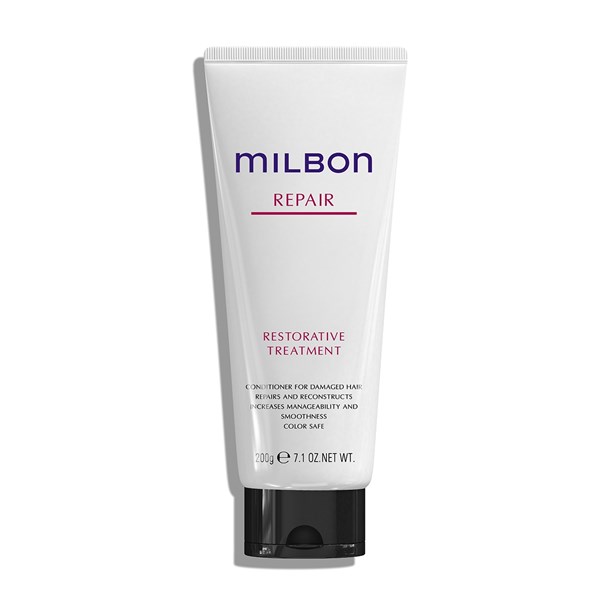
The foundation of any damage recovery routine is a rinse-out treatment that works on the inside of the strand, not just the surface. The Restorative Treatment does exactly that — it's formulated to rebuild protein levels in compromised hair, replenishing the keratin that chemical processes deplete. Think of it as a structural reset rather than a temporary smoothing fix.
What sets a true restorative treatment apart from a standard conditioner is the mechanism: hydrolyzed proteins penetrate the cortex, binding to damaged sites along the protein chains and filling the structural gaps that make hair feel weak, snappy, and dull. After consistent use, hair regains what cosmetic chemists call tensile strength — which, in plain terms, just means it can take the stress of being combed, dried, and styled without immediately breaking. The surface becomes smoother because the cuticle can actually lie flatter when the structure underneath it is solid.
Use it after shampooing on damp hair, focus it from mid-lengths to ends, and leave it on for at least five minutes before rinsing. Heat from a shower cap or a few minutes under a hood dryer accelerates protein absorption. Start with once a week; if your hair has been through multiple bleach sessions or back-to-back chemical services, twice a week until you notice a real change in how your hair feels when wet — it should start feeling more resistant, less stretchy, more like it has something to it.
Editor's Pick
Featured Product
Restorative Treatment
Rebuilds protein structure in chemically processed hair for lasting strength and elasticity.
Sponsored
Building the Recovery Routine Around It
The Restorative Treatment is your weekly anchor, but recovery isn't a once-a-week event. What happens between wash days matters just as much as what you do in the shower. Every time you blow dry, flat iron, or even just sleep on your hair with it loose, you're creating friction and mechanical stress on strands that are already compromised. Leave-in protection isn't optional here — it's how you preserve the progress you're making.
The sequence that actually works: a gentle sulfate-free shampoo to remove buildup without stripping. Protein treatment for five to ten minutes with heat. A light rinse-out conditioner to smooth and start closing the cuticle. Then — and this is the step most people rush past — a leave-in molecular repair treatment on towel-dried hair before you touch any heat tools or let your hair air-dry. This is the layer that keeps working after you leave the bathroom.
The Leave-In Molecular Repair Hair Mask earns its place in a recovery routine because of exactly how it works. Unlike a typical leave-in conditioner or serum that coats the surface, this one targets the hair's polypeptide chains — the protein building blocks — and reconnects what heat and chemical processes have broken apart. You apply it to damp hair after washing, don't rinse it out, and it continues repairing the strand structure between wash days. That continuous repair is what separates recovery from just maintenance.
Leave-In Molecular Repair Hair Mask
One small pump on damp hair, worked from mid-lengths to ends. No waiting, no rinsing. The simplicity is the point — this is doing serious work without requiring much from you, which matters when your hair is in a vulnerable state and you want to minimize the manipulation that causes further breakage. Give it a few wash cycles to accumulate; hair that's been heavily processed may need four to six applications before you feel the elasticity actually returning.
It plays well with everything else in your routine — follow it with a hair oil for extra smoothness, style over it as normal, or let your hair air-dry with it in. It doesn't build up or weigh fine hair down. On the days between your weekly protein treatments, this is how you keep the momentum going instead of losing ground.
Editor's Pick

Featured Product
Leave-In Molecular Repair Hair Mask
No-rinse molecular repair that reconnects broken polypeptide chains and works continuously between wash days.
Sponsored
What Most People Get Wrong About Damaged Hair Recovery
The biggest mistake is over-moisturizing before rebuilding protein. If your hair feels mushy, overly soft, or stretches far before snapping, you've likely been going heavy on conditioners and masks without enough protein to give those strands structure. It feels counterintuitive — your hair seems dry, so you add more moisture — but you're making the problem worse. Dial back on the deep conditioner, bring in a protein treatment first, and give your hair two or three weeks to stabilize before going back to heavier moisturizing products.
Second mistake: expecting overnight results. Hair grows slowly, and repair happens at the strand level, below the surface, well before you see it. Commit to the routine for at least three to four weeks before judging whether it's working. What you're looking for isn't a dramatic visual change — it's hair that feels more alive when you touch it, that dries in a more predictable texture, that breaks less on the brush. Those changes happen quietly, and then all at once you realize your hair is different.
Third: treating leave-in protection as optional. Skipping it entirely — or using one that's too heavy — can stall or reverse your progress. Heat exposure degrades the same protein bonds you're working to rebuild, and it adds up fast. What you want is something that provides both protein support and heat protection in a formula light enough not to weigh down already-processed strands. The REF Leave In Treatment fits that exactly: quinoa protein for genuine strengthening (not just surface coating), organic coconut oil, jojoba, and castor oil for controlled nourishment and flexibility, plus UV protection for color-treated hair. UV exposure degrades cortex proteins the same way heat does — just more slowly, and most people don't account for it.
REF Leave In Treatment: Daily Defense Between Wash Days
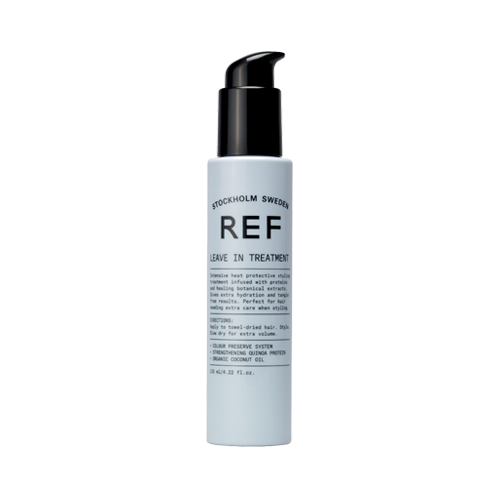
This is your last step every time — a small amount applied to damp or dry hair, before heat tools on wash day or as a between-wash refresh on dry hair. The quinoa protein offers real strengthening support from the inside, not just a coating that wears off by mid-afternoon, while the botanical oils add the hydration and flexibility that keep protein-treated hair from going stiff. On non-wash days, a light application smooths frizz, refreshes surface texture, and keeps color looking vibrant without making hair feel product-heavy. It's the kind of product you stop noticing because it just works — and then realize how much you were missing when you run out.
Editor's Pick
Featured Product
REF Leave In Treatment
Lightweight quinoa protein and botanical oils that protect, nourish, and strengthen between wash days.
Sponsored
The Bottom Line
Damaged hair isn't a permanent state — it's a condition that responds really well to the right approach. The key is understanding that you're working with structure, not just surface. When you rebuild the protein foundation with a targeted rinse-out treatment, protect that progress with a molecular repair leave-in, and add lightweight daily support that actually does something for the strand — you're not just making your hair look better. You're creating the conditions for it to actually be better.
It takes a few weeks of consistency. The results won't be dramatic in the before-and-after sense — they're more like waking up one day and noticing your hair dried differently. That it broke less on the brush. That it feels more substantial in your hands, more like it used to before whatever it went through. That's the change worth working toward. Not a transformation. Just your hair, back to being itself.
Start with the Restorative Treatment this week. Three weeks of the full routine and you'll feel the difference before you need anyone to tell you it's working.
