
Gray Blending, Decoded: The Right Color Formula for Your Gray Pattern
Gray Blending, Decoded: The Right Color Formula for Your Gray Pattern
You're sitting in the chair, and your colorist asks, "Are we doing demi or permanent today?" and honestly, you have no idea what the right answer is. You just know you have some grays at the temples, more than you'd like scattered through the crown, and you want it to look effortless — not like you're fighting your own hair every six weeks.
Why One Gray Formula Doesn't Work for Everyone
Here's the thing nobody tells you up front: gray hair isn't one texture or one problem. It's actually a structural shift. Gray and white strands grow in without melanin, the pigment that gives hair its color, and that absence changes more than just the hue — it changes the hair's texture, too. Gray strands tend to be coarser and more resistant to color, with a tighter, smoother cuticle that doesn't let color molecules in as easily as your pigmented hair does. That's why the same formula that covers your brunette strands beautifully can slide right off your grays, fading within two or three washes.
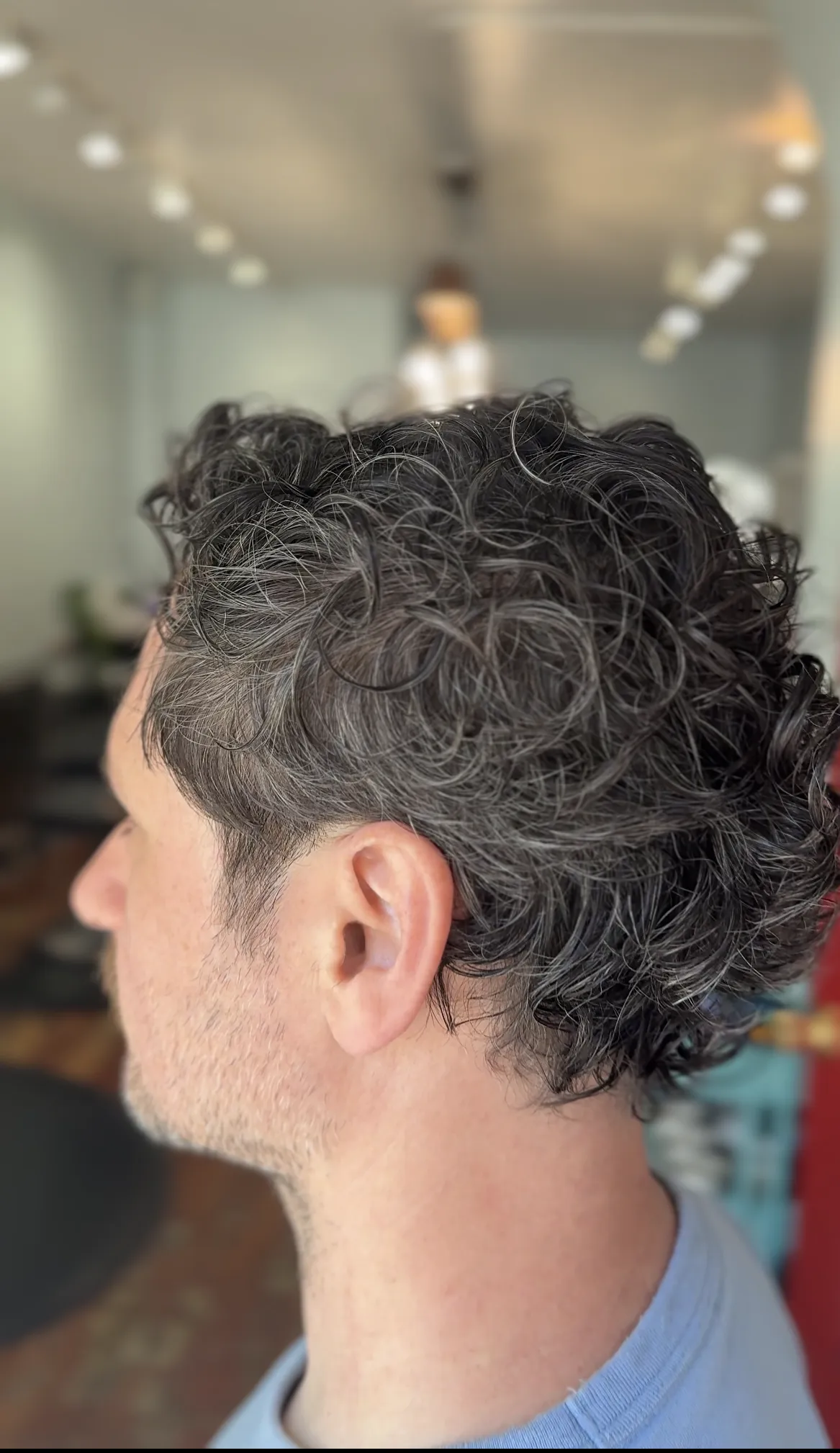
The other piece is pattern. Some people get gray in a concentrated patch — usually starting at the temples or the part line — while others get it scattered evenly throughout, salt-and-pepper style. And the percentage matters just as much as the location. Colorists generally think in bands: under 25% gray, you're working with isolated strands you can disguise with dimension. Between 25 and 50%, you're at the point where gray reads as a defined element of your color, not just stray hairs. Past 50%, gray is doing enough of the visual work that your whole formula needs to be built around it, not just patched around it.
This is exactly where most at-home box dye jobs go sideways. A box color is formulated to be one-size-fits-all, which means it's not built to account for resistant cuticle, your specific gray percentage, or the difference between a temple patch and scattered grays through the whole head. You end up either under-covering the toughest strands or over-processing the rest of your hair trying to compensate. Neither feels good, and neither looks like the soft, blended result you actually wanted.
What to Actually Look For in a Gray Formula
This is where understanding demi-permanent versus permanent color actually pays off. Permanent color uses ammonia to fully swell and open the cuticle, then deposits color molecules deep into the cortex — the inner layer of the strand — along with peroxide, which lifts your natural pigment at the same time it deposits new color. Those molecules are too large to wash back out, which is why permanent color holds until new growth pushes it out, and why it's the formula of choice once you're past that 25% gray mark. If your gray is concentrated and resistant — think wiry temple strands that seem immune to every color you've tried — permanent is usually the only formula with enough strength to fully saturate that cuticle.
Demi-permanent color works differently, and it's worth understanding the distinction instead of treating it as the "lighter version" of permanent. It's ammonia-free, so it doesn't fully open the cuticle — instead, the color molecules sit just under the surface and gradually fade out over four to six weeks rather than growing out. Demi can cover up to about 70% of gray depending on the formula, but the look it creates is different by design: rather than flat, total coverage, the gray peeks through as soft, glittery dimension instead of a stark root line. If your gray is scattered rather than concentrated, and you're under that 50% mark, this is often the more flattering route — it blends instead of erasing.
The honest answer for resistant, coarse gray is that it sometimes needs a little extra help regardless of which formula you land on. Pre-softening — applying a gentle developer to just the toughest strands before the full color goes on — opens that stubborn cuticle so the rest of the formula can actually do its job. It's a small step, but it's the difference between color that grabs evenly and color that looks patchy by week two.
Arey | The System
Color formula is half the equation. The other half is what's happening at the follicle level before color ever touches your hair, and that's where a slower, more strategic move makes a real difference. Arey The System isn't a color product — it's a daily scalp serum and supplement duo designed to work with your biology, not against it, by supporting the pigment-producing cells in your follicle and the rate at which new gray comes in.
Think of it as turning down the volume on the problem instead of just reacting to it every six weeks. The serum is massaged into the scalp daily, targeting the follicle environment where pigment cells live, while the supplement works from the inside with biotin and B and D vitamins to support the follicle's overall health. Used consistently over three to six months, the goal isn't to reverse gray that's already there — it's to slow how quickly new gray shows up, which means fewer urgent touch-up appointments and a color formula that has to do less heavy lifting over time.
If you're someone who feels like you're chasing your roots every four weeks, this is the kind of quiet, behind-the-scenes support that makes your color formula's job easier, not harder. It's not a replacement for the demi or permanent decision above — it's what happens in between those appointments that determines how fast you're back in the chair.

Building a Real At-Home Maintenance Routine
Whatever formula your colorist lands on, what you do at home in between visits is what decides whether your color still looks intentional in week five or whether it's gone flat, brassy, or patchy by week three. The biggest culprit is heat — both from your shower and your styling tools. Hot water swells the cuticle and lets color molecules slip back out faster, so rinsing in lukewarm water is one of the simplest things you can do to extend your formula's life, whether it's demi or permanent.
Washing frequency matters just as much. Every wash is a small opportunity for color to fade, so stretching to two or three washes a week — with a dry shampoo in between if you need it — keeps both demi and permanent color looking fresher for longer. And because gray and color-treated hair are both more porous and more prone to dryness, a sulfate-free shampoo and conditioner aren't optional extras here. Sulfates are efficient at stripping oil, but they're not selective about it — they strip color molecules right along with everything else.
This is also where toning becomes part of your routine, not just something that happens in the chair. Gray and lightened hair are especially prone to picking up warmth — a yellow or brassy cast — between appointments, simply from product buildup, sun exposure, and minerals in your water. A violet-pigmented conditioner addresses this directly: because purple sits opposite yellow on the color wheel, it cancels out that warmth on contact, which is exactly the kind of small, consistent habit that keeps your blend looking cool and intentional instead of dingy.
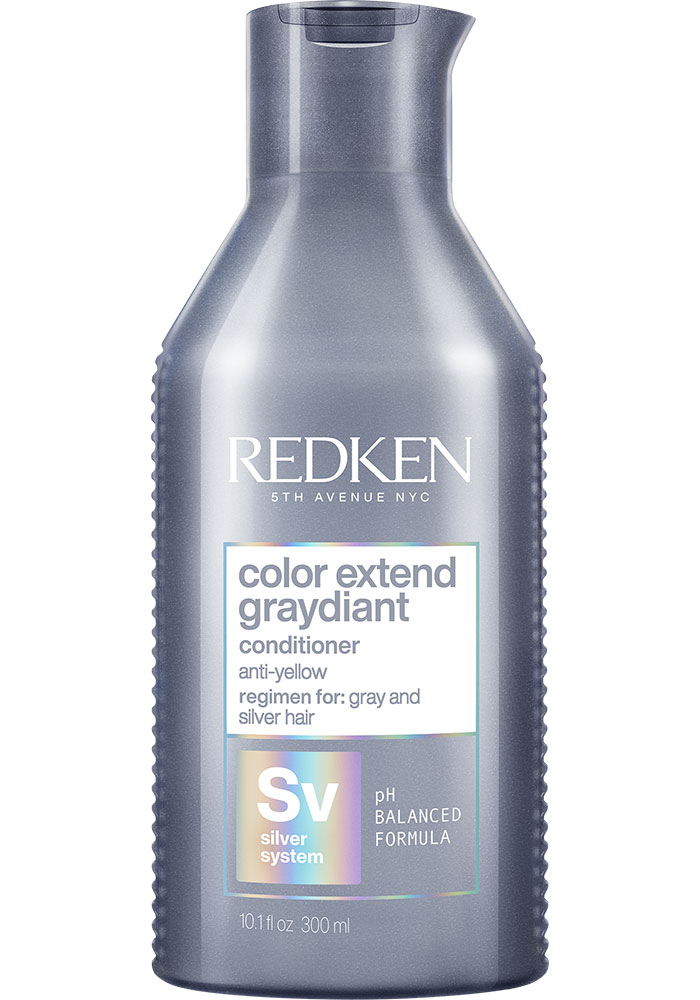
Redken Color Extend Graydiant Purple Conditioner
This is the product to reach for on the days between your purple shampoo, or on days your gray or silver tones are starting to look a little warm instead of bright. Color Extend Graydiant is built specifically for gray and silver hair, with violet pigments that deposit just enough cool tone to counteract brassiness without you having to think about it — you condition the way you normally would, and the toning happens as a side effect of your routine, not an extra step.
It pairs naturally with whatever your colorist used in the chair, demi or permanent, because it's not trying to change your color — it's protecting the tone that's already there. That's the difference between a routine that maintains your blend and one that just hopes the color holds until your next appointment.
Pro Tips and the Mistakes Worth Avoiding
The single biggest mistake people make with gray coverage at home is treating every wash like a fresh start. Washing too often, or with the wrong shampoo, is the fastest way to undo a great color appointment — and most people don't realize a "color-safe" label isn't the same as sulfate-free. Read the back of the bottle, not just the front, because that's where the actual difference lives.
The second mistake is assuming a single all-purpose formula should work the same everywhere on your head. If your grays are concentrated at the temples but scattered everywhere else, that's not a contradiction your colorist can't handle — it's actually a normal pattern that calls for layering technique, like pre-softening just the resistant patch while using a lighter touch through the rest. Mentioning this pattern out loud at your appointment, instead of assuming your colorist already knows, makes a real difference in how evenly your color takes.
And the third — sun and heat are doing more damage than people give them credit for. UV exposure breaks down color molecules the same way it fades a fabric left in a window, and repeated blow-drying or hot tools speed that process along. A leave-in with UV protection, or just a hat on the days you know you'll be outside for hours, is a low-effort habit that keeps your formula's lifespan from quietly shrinking.
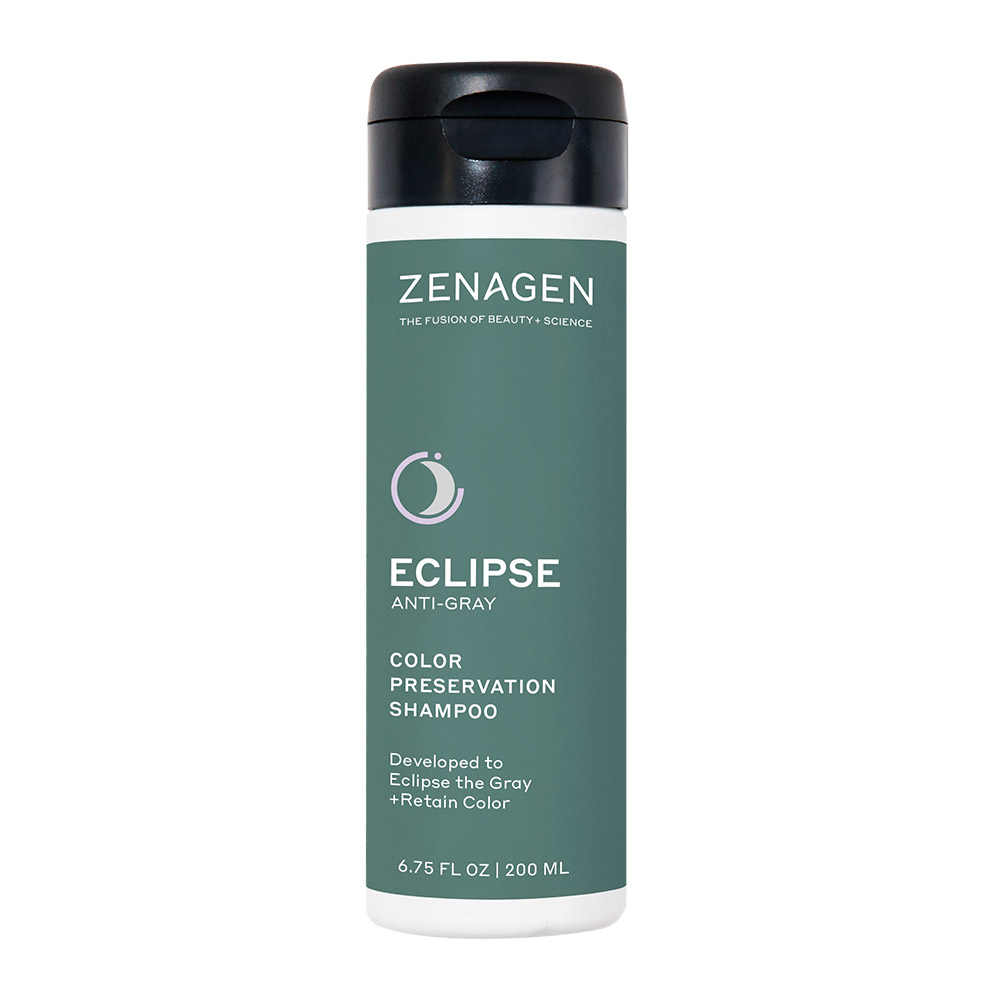
Zenagen Anti-Gray Color Preservation Shampoo
This is the shampoo that addresses the habit most people don't think to fix — the wash itself. Zenagen's Anti-Gray Color Preservation Shampoo is formulated without the harsh sulfates that pull color and tone out of gray and color-treated hair, so the cleansing step that happens every few days stops working against your formula and starts working with it.
It's the kind of swap that doesn't ask you to change your routine at all — same number of washes, same time in the shower — it just changes what's actually happening to your strands while you do it. Paired with the violet conditioner and a little patience between salon visits, it's one of the easiest ways to make sure the color your stylist worked hard to get right is still the color you're seeing in the mirror three weeks later.
The Bottom Line
There's no universal answer to demi versus permanent, and that's actually good news — it means the decision can be made specifically for your gray, not for gray hair in general. If you're under 50% gray and want something soft and low-commitment, demi is probably your move. If you're past that mark, or your grays are coarse and resistant, permanent is what's going to actually saturate those stubborn strands. Either way, your colorist needs to know your pattern, not just your percentage.
The other half of the equation is just as important, even though it's quieter. What you do in the shower three times a week determines whether your appointment lasts four weeks or six. Sulfate-free cleansing, a violet conditioner in rotation, lukewarm water, and something working steadily in the background to slow how fast new gray shows up — that's a routine, not a quick fix, and it's the kind of restraint that actually pays off.
Your gray doesn't need to be solved. It just needs a formula and a routine that actually understand it.
