
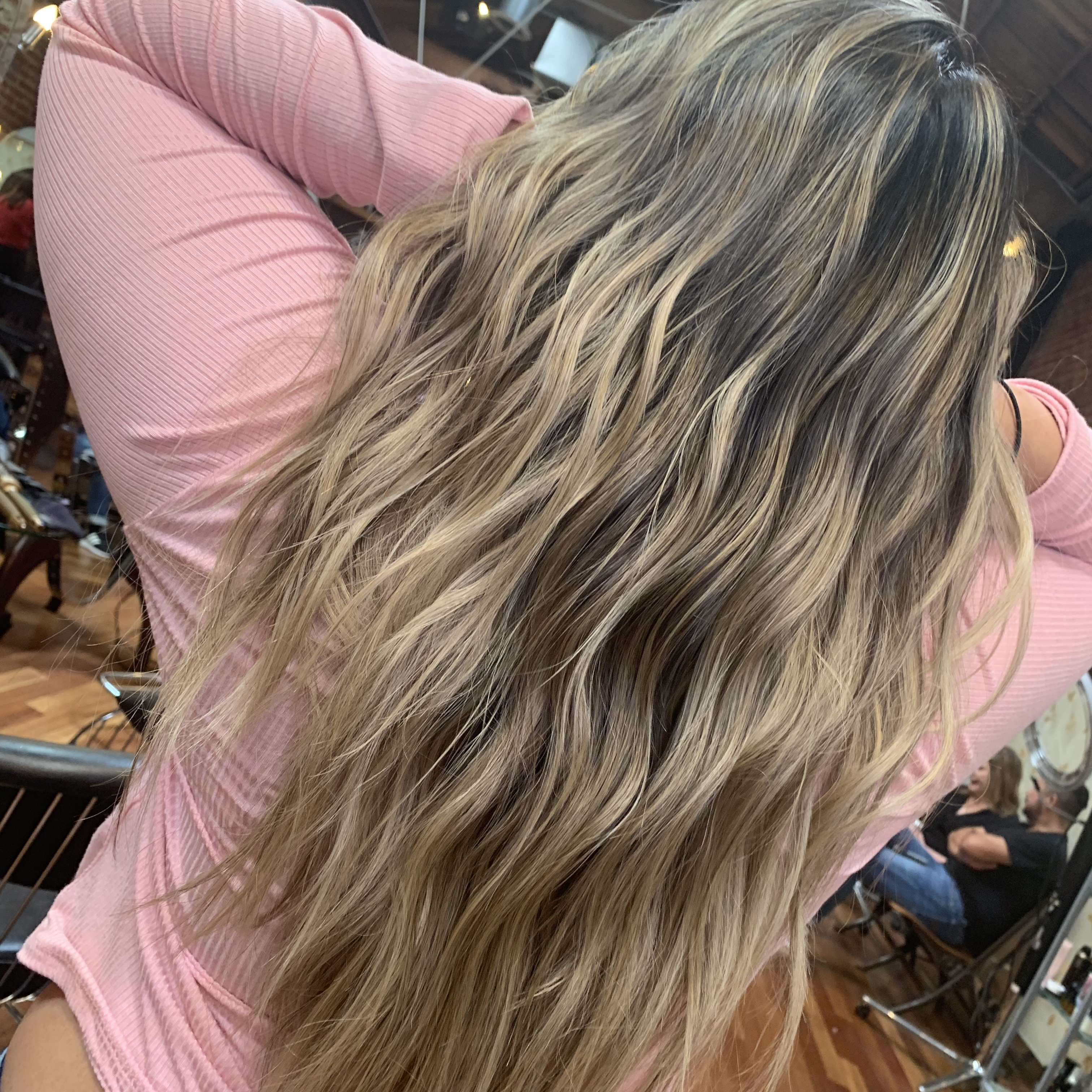
Volume Boost Blueprint: From Flat to Fabulous Hair
You wash your hair in the morning. You dry it carefully. You even flip your head upside down like every stylist has told you to. And by noon, it's flat again — limp, close to the scalp, utterly defying any memory of the volume you created two hours ago. Honestly, it's one of the more demoralizing things that can happen on a Tuesday.
Here's the thing: flat hair isn't bad luck and it's not about how hard you try. It's biology — and once you understand what's actually happening, you can stop fighting the wrong battles and start doing the things that work.
Why Your Hair Is Flat (And Why Most Fixes Don't Stick)
Fine hair has a smaller diameter than other hair types — that much you probably already know. But what fewer people realize is that fine strands also have fewer cuticle layers, which means they sit closer together on the scalp, they're more susceptible to being weighed down by products, and they tend to reflect light in a way that makes them look even flatter than they are. So right from the start, you're working with a thinner raw material that needs more deliberate support.
Then add sebum into the picture. Your scalp produces oil naturally — it's supposed to. But when that sebum builds up between washes, it coats the hair shaft from root to mid-length, and that weight pulls the hair downward. It's a physics problem: even a thin film of oil can reduce the lift angle at the root from something that looks bouncy to something that looks defeated. The scalp has more sebaceous glands per square centimeter than almost anywhere else on your body, and when those glands are overactive — which hormones, diet, and even stress can all influence — the flat hair cycle becomes a daily one.
Hormonal changes compound the issue over time. Research in trichology consistently shows that estrogen shifts — whether from pregnancy, perimenopause, or stress — alter the hair growth cycle, often shortening the anagen (growth) phase and causing strands to come in finer than before. So if your hair has been getting noticeably thinner over the last few years rather than just sitting flat, that's a different problem — and it has a different solution, one that starts at the scalp rather than the styling step.
The other reason most volume fixes fail? They're temporary surface tricks. A volumizing mousse thickens the hair shaft with polymers while it's wet, but once those polymers break down with humidity or movement, you're back to baseline. Same with teasing — you're creating structural lift by roughing up the cuticle, but you're also causing friction damage, and the effect lasts maybe a few hours. Real, lasting volume comes from addressing root causes: scalp health, hair shaft diameter, and the actual weight of what you're putting on your hair.
What to Look For in Volumizing Products
If you're shopping for volume, three categories of ingredients actually move the needle. The first is proteins — hydrolyzed wheat protein, keratin, and rice protein work by filling in gaps along the hair shaft, effectively plumping each individual strand so it takes up more space. A hair strand that's slightly larger in diameter sits away from other strands rather than lying flat against them. That's body, and you can create it at the shampoo step if you choose the right formula.
The second category is panthenol — pro-vitamin B5. It has a reputation as a moisturizer, which it is, but it also penetrates the hair shaft and binds water molecules inside the strand, which gives fine hair a gentle structural firmness without adding any visible heaviness. The key principle here: most moisturizing ingredients coat the outside of the hair and that coating, even when tiny, pulls strands down. Panthenol works from within, so the moisture benefit doesn't come with the weight penalty.
The third thing to look for is caffeine and scalp-stimulating actives. Caffeine increases microcirculation in the scalp — it temporarily boosts blood flow to follicles, which delivers more oxygen and nutrients to the root zone. Stronger, healthier follicles produce thicker strands over time. It's not an overnight fix, but it's a meaningful long-game ingredient. Niacinamide (vitamin B3) functions similarly, improving barrier integrity at the scalp and reducing sebum overproduction, which means less of that oil-weight pulling your roots flat by midday. When you find these actives in a shampoo, you're not just cleaning — you're treating.
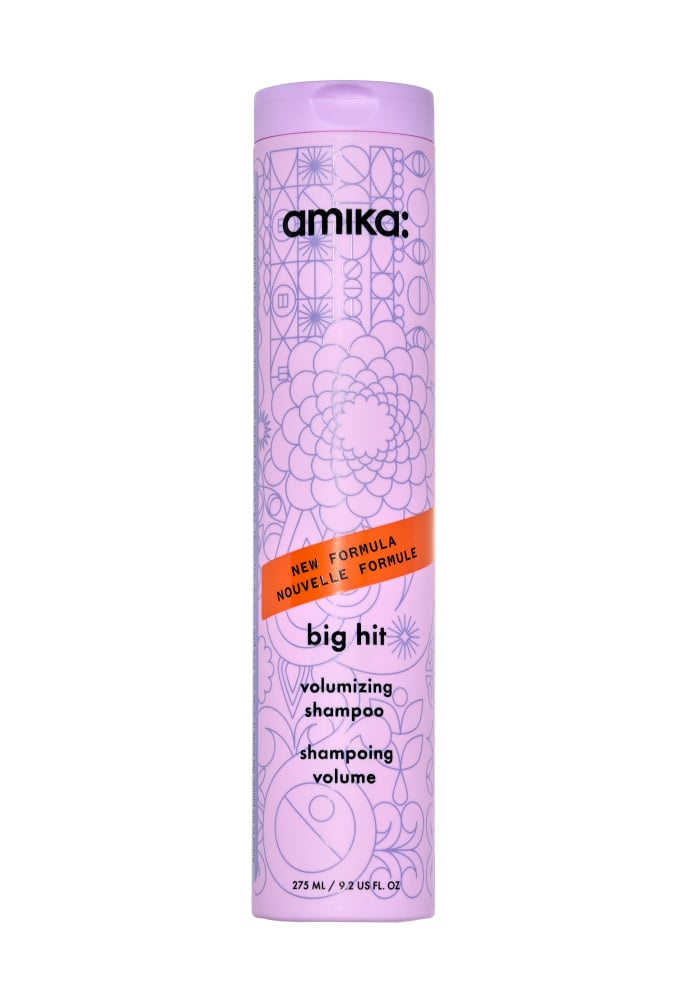
amika Big Hit Volumizing Shampoo
This is the shampoo to start with. The amika Big Hit Volumizing Shampoo is built specifically around the problem of fine, flat hair — not in a vague adds-body marketing-copy way, but in a formulation way. The ingredient list reads like a volumizing brief: caffeine to energize the scalp and clear out sebum, niacinamide to regulate oil production, panthenol for structural moisture, and biotin to support strand strength at the follicle level. There's also sea buckthorn, which is rich in omega-7 fatty acids and does genuinely good things for scalp health — it's not filler.
What amika tested and confirmed is that this formula delivers 2.3 times more volume compared to unwashed hair — not compared to a bad shampoo, but compared to the starting point. That's a real, measurable lift. And the formula gets there without sulfates, which matters for fine hair because sulfates strip the hair and scalp aggressively, which can trigger rebound oil production. You end up greasier faster, you're back to flat sooner. The Big Hit avoids that trap entirely.
The texture while washing is satisfying — it lathers well without feeling stripping, and after rinsing, the hair has that specific light, clean feeling at the root that's the first signal of real lift. Pair it with a light conditioner on the mid-lengths and ends only — never the roots — and you're setting up everything else in your routine to work harder.
Building the Routine Around the Wash
Volume is a layered result. The shampoo creates the foundation — a clean, light root — but what you do next determines whether that lift survives contact with heat, humidity, and actual life. The key principle for fine hair: every product you add is a weight decision. You're asking your hair to carry it, and fine hair has a low tolerance before it starts to droop.
This is where styling products for fine hair are so frequently misused. People reach for a serum or a cream — both of which are oil-based or film-forming and designed for thicker hair — and apply them all over. The hair looks better for twenty minutes and then collapses under the weight. What fine hair actually needs is a foam or a souffle-style product: something that creates structure from the inside as it dries rather than coating the outside. The application technique matters too. Work the product from mid-length down, use the heat of the dryer to activate lift at the root, and always let sections cool before releasing them from the round brush — that's where the set actually happens.
On the blow-dry itself: rough-dry to about 80% without a brush first. This is the step most people skip and it's probably the most impactful one for volume. When hair is damp and the cuticle is slightly swollen, rough-drying with your fingers and no nozzle attachment creates natural texture and root separation that you literally cannot recreate at the brush stage. The hair shaft actually expands a touch without the nozzle, which is why stylists always mention this step — it's not a shortcut, it's a technique. Once you're at 80% dry, section and finish with the round brush, lifting from the root, nozzle aimed downward to seal the cuticle as you set the shape. Let each section cool on the brush before releasing it. That's the moment the volume is actually locked in.
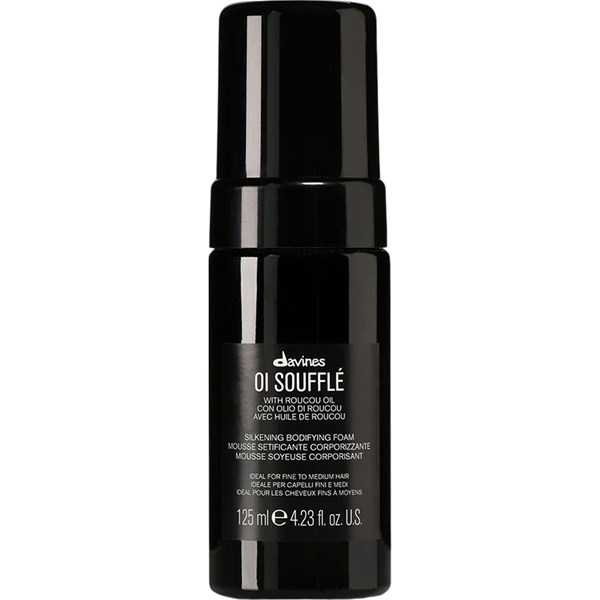
Davines OI Soufflé
This is the product that bridges the gap between the shampoo step and the blow-dry — and it does it without costing you any of the volume you just built. The Davines OI Soufflé is a liquid-to-foam leave-in treatment formulated specifically for fine to medium hair. It goes on as a light liquid, transforms into a foam as you distribute it, and then sets with the heat of the dryer into a texture that adds body from within the strand rather than coating it from outside.
The key ingredients are Roucou Oil — sourced from the Amazon, rich in beta-carotene and antioxidants — and chicory root extract, which provides structure and a light hold that persists through humidity without stiffness. The heat protection goes up to 446°F, which means you can blow-dry aggressively for lift without damaging the cuticle. For fine hair, that combination of lightweight structure and serious thermal protection is genuinely rare. Two to three pumps on damp hair, worked through from mid-lengths down, is all you need. The foam is concentrated, and more isn't better — for fine hair, restraint is always the move.
What Most People Get Wrong About Volume
The most common mistake: treating the symptom instead of the source. People double down on styling products — more mousse, thicker cream, another pass with the dryer — when the real problem is happening at the scalp. If your follicles are producing thinner strands than they used to, or if excess sebum is creating a weighted film at the root, no amount of blow-dry technique will compensate for that. The fix has to start lower — at the scalp itself.
Scalp health and volume are more directly linked than most people realize. When follicles are healthy, well-nourished, and clear of buildup, they produce strands with a larger diameter. When they're congested, undernourished, or affected by hormonal disruption, the strands come in finer and shed sooner. The anagen phase — the active growth period — shortens, which means fewer hairs in active growth at any given time. Fewer, finer hairs equals visible thinning. That's not a styling problem. That's a scalp problem, and it needs a scalp-level solution.
The other mistake is washing too infrequently in an attempt to let natural oils do their thing. For fine, flat hair, infrequent washing is often actively harmful — the sebum accumulates at the root, weighs the hair down, and creates a cycle where hair looks greasy faster and faster with each stretch. For most people with fine hair, an every-other-day wash with the right lightweight shampoo is the practical sweet spot. Daily washing with a gentle sulfate-free formula is also completely fine if that works better for your schedule. The stigma around washing fine hair daily is mostly outdated — the shampoo formula matters far more than the frequency.
IGK SPONSORED Hair Density Scalp Treatment
This is the long game in your volume routine, and it's the step that makes everything else more effective over time. The IGK SPONSORED Hair Density Scalp Treatment is a leave-in scalp mist formulated around three key actives: biotin, hair-boosting peptides, and pumpkin seed oil. The biotin works at the follicle level to support strand strength — not just hair that looks thicker, but hair that actually is. The peptides signal the scalp's cellular machinery to support fuller, denser growth. Pumpkin seed oil brings anti-inflammatory action that research has linked to reduced DHT activity at the follicle — and since DHT is one of the primary hormonal drivers of follicle miniaturization, that's a meaningful ingredient to have in a density treatment.
What makes this treatment easy to actually use is the format. It's a weightless mist — no rinsing, no restyling, no disrupting the volume you just built into your blowout. You apply it directly to the scalp on dry or damp hair, massage it in for a minute, and move on. In IGK's own testing, 94% of users saw greater volume, fullness, and thickness within four weeks. That's not marginal improvement — that's a consistent, meaningful response. Your results will depend on what's driving your flatness, but if it's follicle health and strand caliber rather than purely styling, this is the tool that addresses it at the root. Literally.

The Bottom Line on Volume
Flat hair has layers. There's what's happening at the follicle — strand diameter, density, growth cycle health. There's what's happening at the scalp — sebum balance, circulation, inflammation. And there's what's happening in your routine — product weight, application technique, heat styling approach. Address all three levels and volume stops being something you manufacture for a few hours and starts being something your hair actually has.
The routine that gets you there: start with the amika Big Hit Volumizing Shampoo to clean the slate — removing the buildup and oil that pulls your hair flat before you even touch a dryer. Layer in the Davines OI Soufflé on damp hair before styling, and let the blow-dry do the heavy lifting with root-focused technique. Then make the IGK SPONSORED Scalp Treatment your daily non-negotiable — apply it, massage it in, and let it work in the background. Four weeks from now, you're not just looking for a better blowout. You're building hair that holds volume naturally, because the follicles underneath are stronger.
Your hair doesn't need to be fought with. It just needs the right support at the right levels. Start there and let it catch up to you.
