
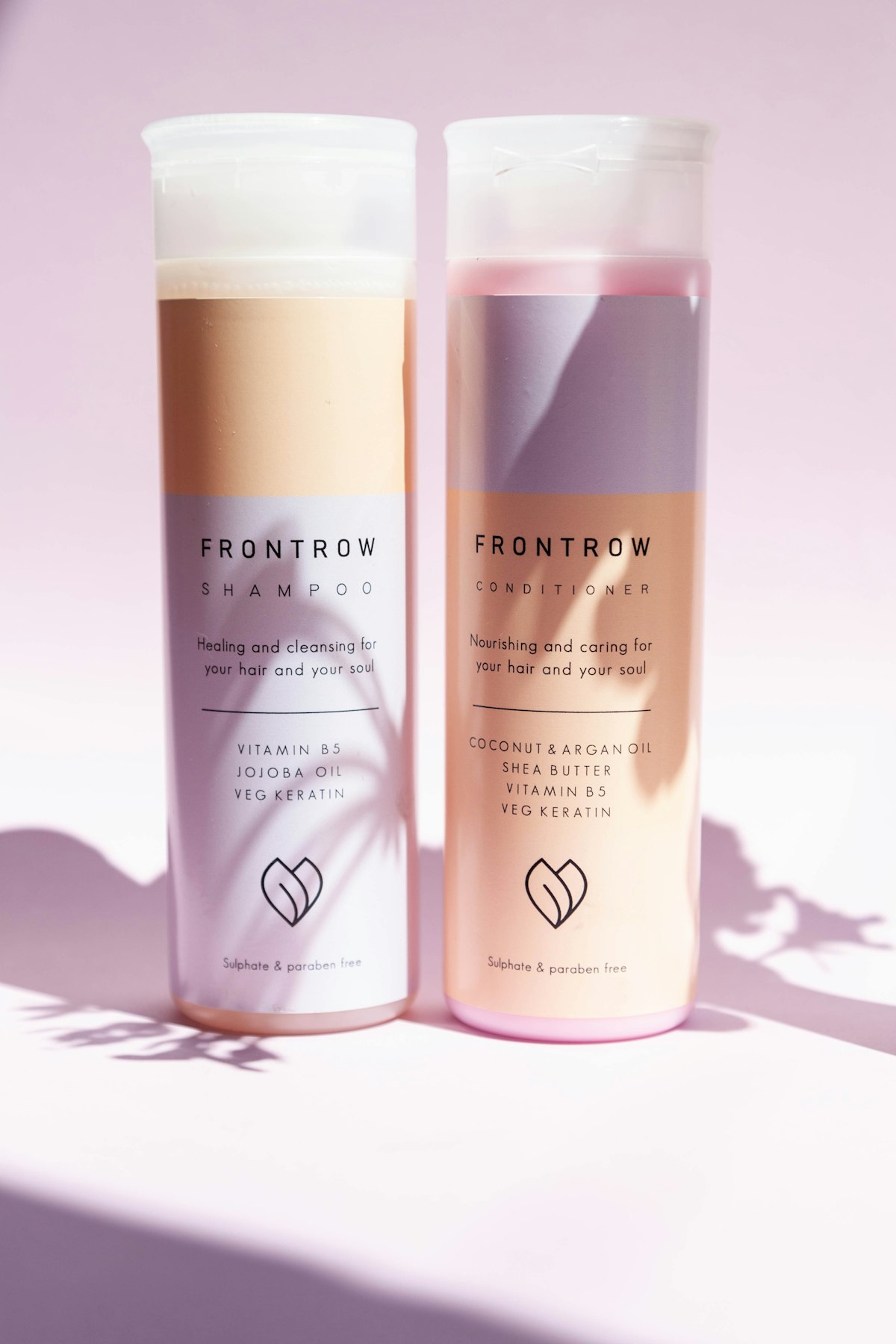
What Chlorine in Your Shower Water Is Really Doing to Your Hair
Every morning, you step into the shower without thinking twice about what's coming out of that showerhead. But the same water that wakes you up — chlorinated, mineral-laden, sometimes carrying trace heavy metals — is actively working against your hair. The evidence is in your frizz, your breakage, your blonde color dullness. And it has nothing to do with your shampoo.
The Water Problem Nobody Stylist Is Telling You
When you wash your hair, you're not just adding water — you're exposing every strand to whatever your municipal water supply contains. In most cities, tap water is treated with chlorine or chloramine to kill bacteria and make it safe to drink. That's great for public health. For your hair, it's another story entirely.
Chlorine is an oxidizing agent. When it contacts hair, it breaks down the disulfide bonds that hold your hair's protein structure together. These bonds are what give your strands strength and elasticity — they're essentially the scaffolding that keeps your hair from falling apart. Chlorine dissolves that scaffolding. What you're left with is porous, weakened hair that absorbs everything (including pollutants and minerals from the same water) and retains nothing — including moisture.
Then there's the cuticle problem. Healthy hair cuticles lie flat, like shingles on a roof, reflecting light and sealing in moisture. Chlorinated water raises those cuticles — permanently, in some cases, with repeated exposure. That's the root cause of the chronic frizz, rough texture, and lack of shine that even the most expensive conditioners can't seem to fix. You're treating the symptom while the cause hits you every single morning.
Hard water compounds everything. When water has high mineral content — calcium and magnesium primarily — those minerals deposit on your hair shaft with every wash. They form a film that makes hair feel perpetually coated and heavy, prevents product from penetrating, and accelerates color fade. A study published in the International Journal of Trichology confirmed that hard water causes measurable changes in hair texture and increases breakage compared to distilled water — mineral deposits create friction between strands, physically weakening them over time. Beyond chlorine and minerals, some tap water supplies carry trace amounts of copper, lead, and iron, which research has linked to oxidative stress in the scalp and disrupted hair follicle cycling.
What You Actually Need to Fix This
Here's the liberating part: all of this damage is external, not follicle-level. Your follicles aren't being destroyed — they're producing hair that gets wrecked the moment it hits your water. Which means the fix is structural, not medical, and entirely within reach.
Start at the source. The most effective intervention isn't a product you apply after your shower — it's changing what comes out of the showerhead. Look for filtration systems that use KDF-55 technology, a copper-zinc alloy that works through a redox reaction to neutralize chlorine, chloramine, and heavy metals. Unlike carbon filters, KDF-55 performs in hot water, which matters because heat opens the hair cuticle and makes it more vulnerable to chemical exposure. You want your filter working hardest precisely when you're most exposed.
For the water that's already done its damage, look for two things: bond repair and cuticle sealing. Bond repair means treating broken disulfide bonds within the cortex of the hair — not just coating the outside with silicone. Biomimetic peptides and amino acid chains can reconnect those fractured bonds at the molecular level. For cuticle sealing, acidic formulas (pH below 4.5) force the cuticle flat, lock in moisture, and restore the reflective surface that creates shine. Finally, if ongoing shedding is part of your picture, look for growth factor actives that work at the follicle itself — stem cell-derived proteins and peptides that signal follicles to stay in their growth phase longer.
Filterbaby Faucet + Shower Filter Bundle: Start at the Source
If there's one change that will have the most immediate, visible impact on your hair, it's filtering your water. The Filterbaby Faucet + Shower Filter Bundle is the most comprehensive approach available right now. Filterbaby's Pro Series removes up to 99.9% of chlorine, chloramine, and 60+ contaminants as small as 0.00001mm — developed in collaboration with Dr. Robert Dorfman, a hair restoration and plastic surgeon based in Los Angeles who has spent his career studying how environmental factors affect hair health.
What makes the bundle particularly smart is the faucet filter component. Most people only think about shower water — but if you're rinsing with chlorinated tap water at the sink, dampening your hair before styling, or using unfiltered water for overnight treatments, you're undermining everything your shower filter is doing. The bundle eliminates both exposure points simultaneously, which is the only way to actually control what your hair is coming into contact with.
The results people report are striking. Users who were shedding 50 to 75 strands per shower have documented that number dropping to single digits within two weeks of consistent use. Hair feels perceptibly softer — not from added product, but from the absence of mineral coating. Color retains vibrancy noticeably longer. That residue-free, genuinely clean feeling after washing is what your hair is supposed to feel like. The filter installs in minutes without any permanent plumbing changes (important for renters), and cartridges need replacing every three to four months depending on your water quality and usage.
The Repair Routine Your Damaged Hair Needs
Filtering your water addresses the ongoing damage. But the weeks or months of chlorine and mineral exposure before you installed that filter? That accumulated structural damage requires active repair — and it has to happen in the right order.
Filtration first. Start using the Filterbaby bundle consistently with every wash and every rinse. Within the first week, you'll feel the difference immediately after washing — lighter, cleaner, no coating. That's your baseline. From there, add targeted bond repair while your hair is still damp from your (now-filtered) shower.
The K18 Leave-In Molecular Repair Hair Mask is the treatment that makes the most sense for water-damaged hair specifically. K18 uses a biomimetic peptide — an amino acid sequence engineered to match the natural polypeptide chains in your hair — to reconnect broken bonds within the cortex of the strand. It's not a conditioning treatment that sits on the surface; it penetrates the cortex and begins working in four minutes. It stays in — no rinse needed.
For water-damaged hair, this distinction matters enormously. Silicone-based products fill gaps in the cuticle and create temporary smoothness, but they don't address the fractures underneath. K18 does. Use three to four drops on towel-dried hair, distribute through mid-lengths and ends, and let it absorb before styling. Over four to six weeks of consistent use, the cumulative repair is visible: less breakage, more elasticity, noticeably improved texture. Hair that used to snap when you ran your fingers through it starts to bend.
Pro Tips and the Mistakes Most People Make
The most common mistake is treating water damage like a moisture problem. People layer on hydrating masks, leave-in conditioners, and deep treatments — and wonder why nothing sticks. Moisture absolutely matters, but you cannot moisturise your way out of structural damage. The cuticle has to be sealed first. The order of operations is: filter the water (stop the damage), repair the bonds (K18), then layer moisture on top. Getting this backwards is why so many expensive routines underdeliver.
Second mistake: ignoring the scalp. Chlorine and minerals don't just affect the hair shaft — they disrupt the scalp environment too. A chlorine-irritated scalp is often drier, sometimes flakier, and a compromised scalp barrier means chronic low-level inflammation becomes the norm. That inflammation disrupts the hair follicle's normal growth cycle, which contributes to increased shedding over time — a connection that often gets misattributed to stress or hormones when water quality is actually the driver.
The Calecim Advanced Hair System Serum addresses exactly this. Calecim's active ingredient is PTT-6, a complex of growth factors, proteins, and cytokines derived from cord lining stem cells. In peer-reviewed research, PTT-6 demonstrated a 24% increase in hair follicle cell growth and a 30-times reduction in inflammatory signals in the follicle — the precise type of inflammation that chlorine-stressed scalps are prone to. In a 12-week clinical study, participants saw 14% more hairs and 16% increased hair thickness. This isn't topical coating; it's cellular signalling that tells your follicles to stay in their growth phase longer and produce denser, healthier strands.
Apply Calecim serum to a clean, dry scalp two to three times per week. It absorbs quickly without residue or greasy buildup. Pair it with two minutes of circular scalp massage to increase blood flow and help the actives penetrate — this isn't optional if you want real results. Think of it as the long-game layer in your routine: the filter stops the damage, K18 repairs what's broken, and Calecim rebuilds from the follicle up.
Third: manage your timeline. Your hair has been accumulating mineral deposits and chemical damage for years. The first thing you'll notice after filtering is that your hair feels different — lighter, cleaner, genuinely soft. Visible improvement in texture and shine usually follows in four to six weeks. Structural changes — the kind that show up in photos, that other people comment on — take three to six months of consistent care. But you will get there. The ones who don't are those who install the filter, use it once, and give up because their hair didn't transform overnight.
The Bottom Line
The reason so many people struggle with their hair — the persistent dryness, the breakage that keeps coming back, the dullness that doesn't respond to any product — isn't always about genetics or hormones or the wrong shampoo formula. Sometimes it's literally the water touching your hair every single morning. Chlorinated, mineral-heavy tap water is breaking down your hair's protein bonds, raising its cuticle, and inflaming your scalp — and it's doing this daily, without interruption, unless you intervene.
Addressing water quality is one of the most overlooked moves in haircare, and one of the highest-impact. The Filterbaby bundle eliminates chlorine and mineral exposure at the source. K18 repairs the structural damage that's already accumulated. Calecim rebuilds follicle health at the cellular level. Together, they form a complete protocol — not a quick fix, but a real one that works with your hair's biology instead of fighting it.
Start with the filter. Change what your hair is touching before you change anything else. Everything else builds from there — and you'll be genuinely surprised by how much your products start to actually work once they're no longer competing with chemically compromised water.
